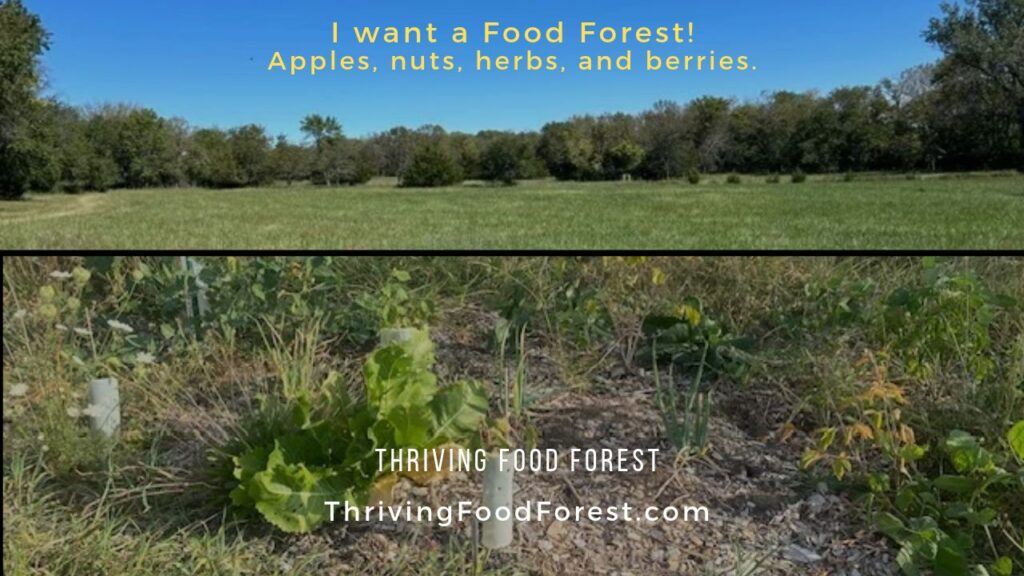
Apples, nuts, herbs, and berries.
“I was walking in my pasture and wondering what to do with it. Then ‘Food Forest’ popped into my head. I didn’t know what that was, so I looked it up. And you came up in the search of my area.”
In the late Summer, a client contacted me for a Thriving Food Forest consult with the above story. I visited onsite and we drove around their property.
“We want chickens or cows over here. We have walnuts and hedge apples out of control over there. We want to plant some trees, maybe chestnuts, to help create a hedge on that side of the pasture.”
Let’s start with Zone 1.
When I asked my client, “What are your dreams and goals for this space? What do you see when you look out at this pasture?”
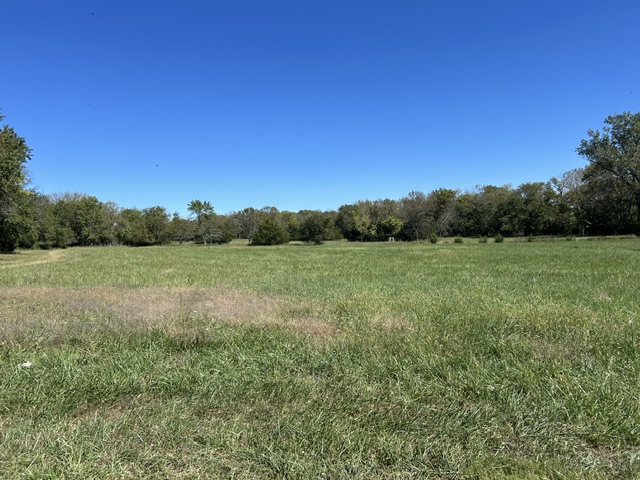
Often they can’t answer. Sometimes that is because we do not have the vocabulary. Or all we have seen are monoculture orchards.
I ask clarifying questions. “What do you like to eat?”. “Why do you want to add apples (or chestnuts)?”
It frequently is the desire to be more self-sufficient.
The above picture is a Zone 2 – 3 pasture.
They were surprised when I said, “Let’s start with Zone 1, the closest to your house”.
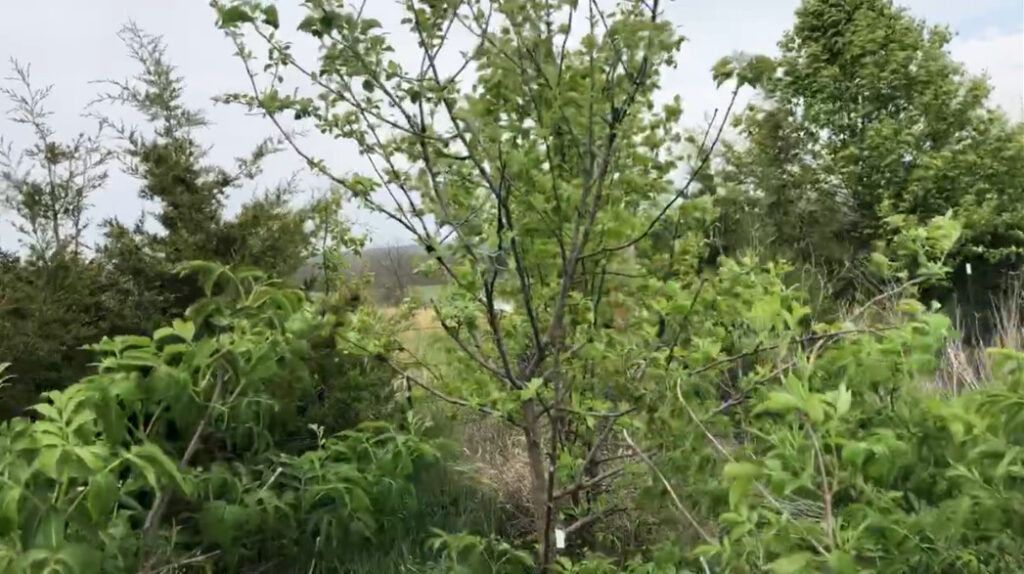
They had a nice garden area – dwarf apples, dwarf peach trees, and blueberries. The Golden Delicious apple trees were struggling because of nearby cedar trees causing cedar apple rust. The blueberries want acidic soil, and this is not it, so they were not growing as well either.
Nearby chicken pen, a garden for growing garlic.
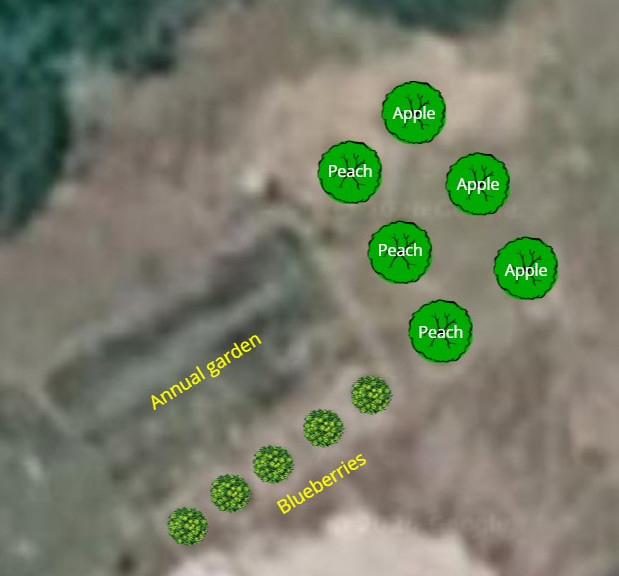
We talked about perennials and how they come back and you don’t have to replant them every year. Adding different layers, from trees to shrubs to the herb layer.
We talked plants. “What do you like to eat?”
“We love rhubarb!”
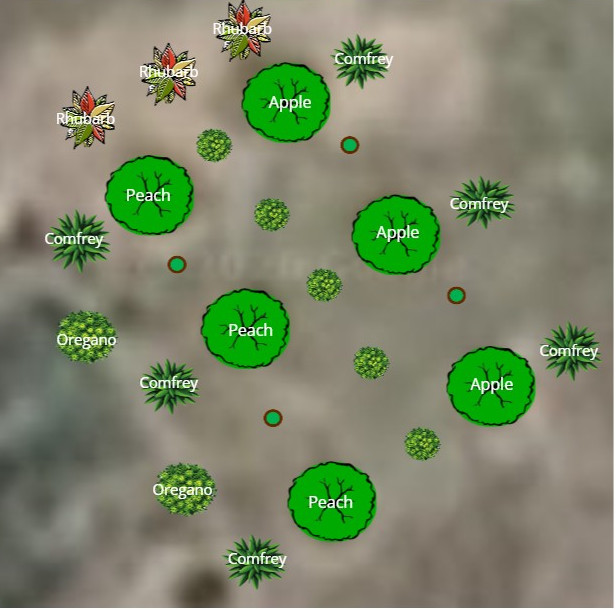
We arrived at adding strawberries, rhubarb, oregano, and walking onions, with comfrey to help the existing apple trees. I also brought along a jar of my homemade comfrey salve as an example of what comfrey can be used for.
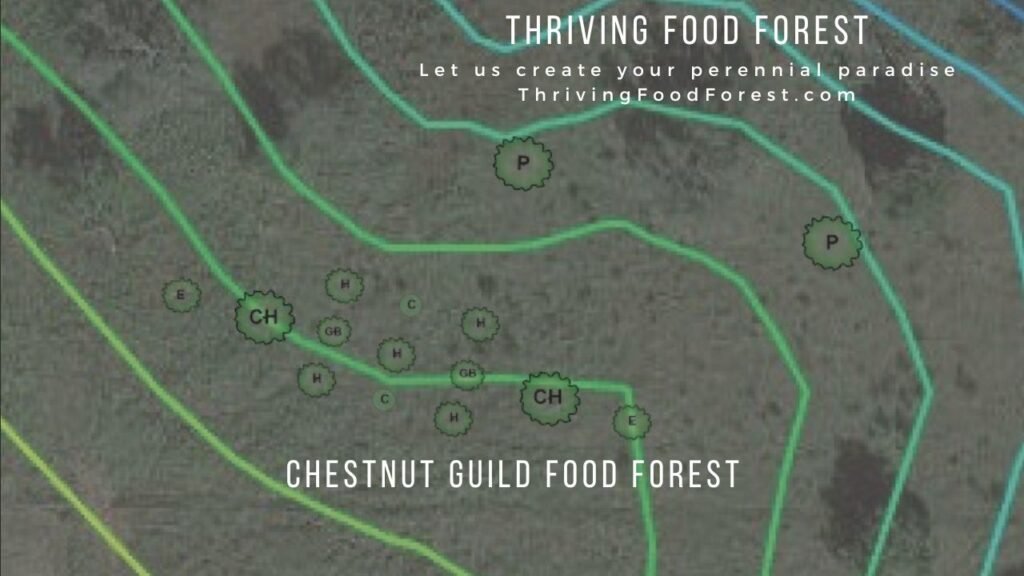
I then took all this away and created this design:
Adding chicory along the edges of the annual garden to pluck to feed to chickens.
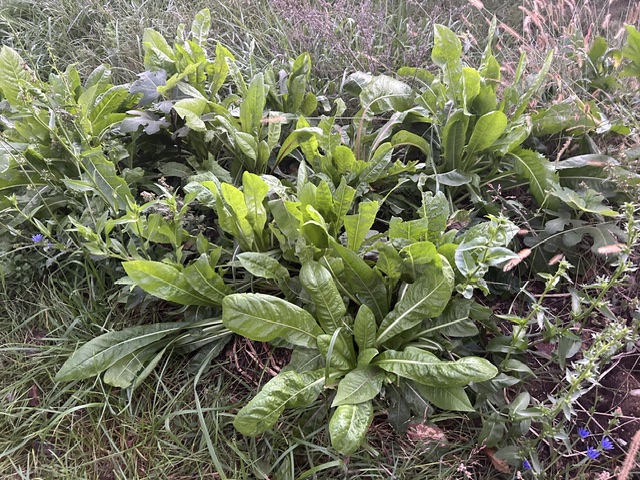
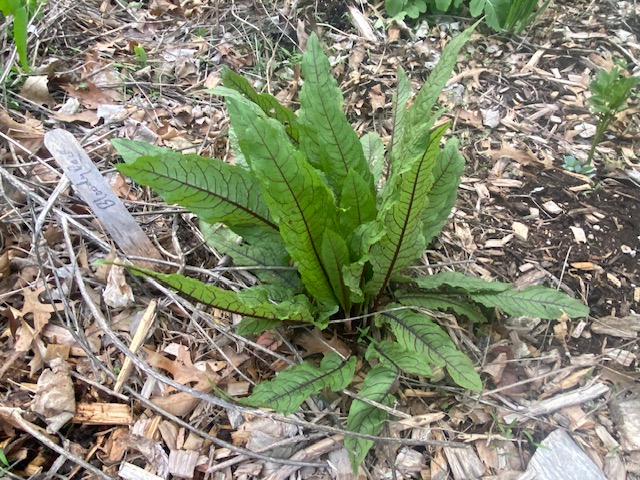
Perennial sorrel greens to add to salads. My favorite is bloody dock sorrel. The lemony taste and red veins make an interesting and tasty addition to a salad.
More Zone 1 – Adding a New Orchard
“We want to add more apples, some pears, and maybe some nuts over here in this space across the driveway.”
Keep to apples on dwarf rootstock. The apples have to be cedar apple rust resistant.
“We really like Enterprise apples.”
Enterprise apples are not currently available on dwarf rootstock, so we chose semi-dwarf rootsock. Two potted Enterprise apple trees as anchor trees. The rest as dwarf rootstock, which have to wait until dormancy (around Thanksgiving) to dig up at the nursery.
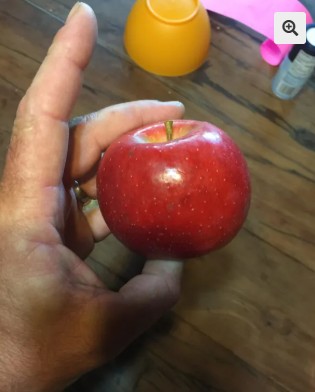
I told them about my favorite apple trees, including Red Cinnamon. It has a mild sweet-tart flavor with an aroma and taste of cinnamon (Yes, really). And Chojuro Asian pears that taste like butterscotch.
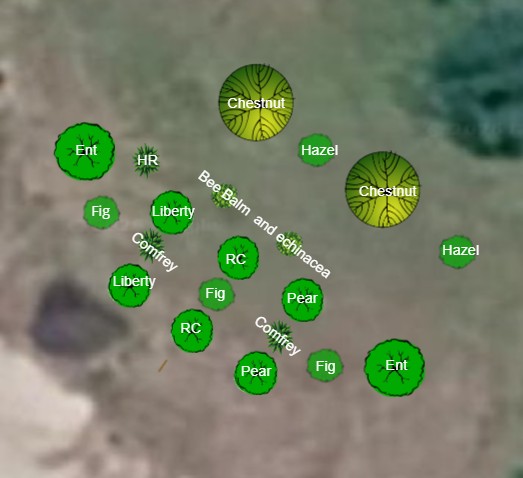
We arrived at Enterprise, Liberty, Red Cinnamon apples and Chojuro Asian pears, along with Chicago Hardy figs. Comfrey as support for the apples.
“We want also want to add some nuts”. So we added two chestnuts and some hazelnuts. Bee balm, echinacea, and horseradish.
My Food Forest
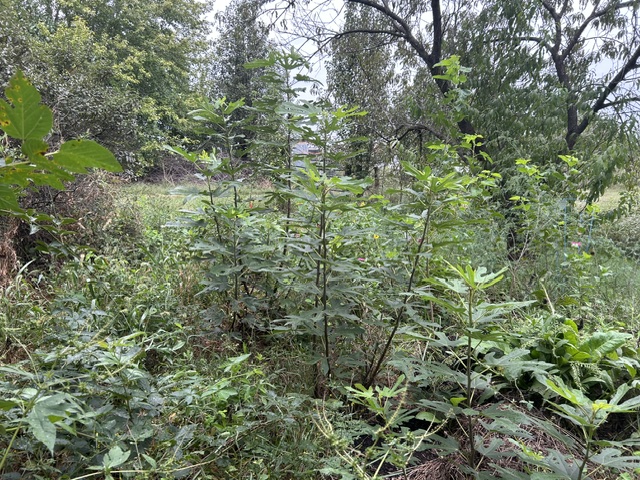
This is my food forest – with apples, Chicago Hardy figs, blackberries, comfrey for making salve and for chop and drop fertility, strawberries, sunflowers, pollinators like Zinnias, chicory for the chickens, and even a patch for annual potatoes.
If this resonates with you and you would like a food forest orchard with nuts and fruit trees, schedule your custom food forest consult Discovery call.
I am a guy who grows chestnuts in Kansas, where we can go from 33 degrees to 96 in two days. Sometimes it feels like the odds are against me.
I design food forests with nuts, fruits, berries, culinary and medicinal herbs.

Seeds have a memory. They remember the place they came from – in Kansas it is those brutal winters, scorching summers, lack of rain for long periods of time.
My Midwest Memory trees are adapted to the Midwest Zones 5-7.
Chestnuts, hazelnuts, and elderberry.
So where are your trees and seeds from? And do they know where they’re going?